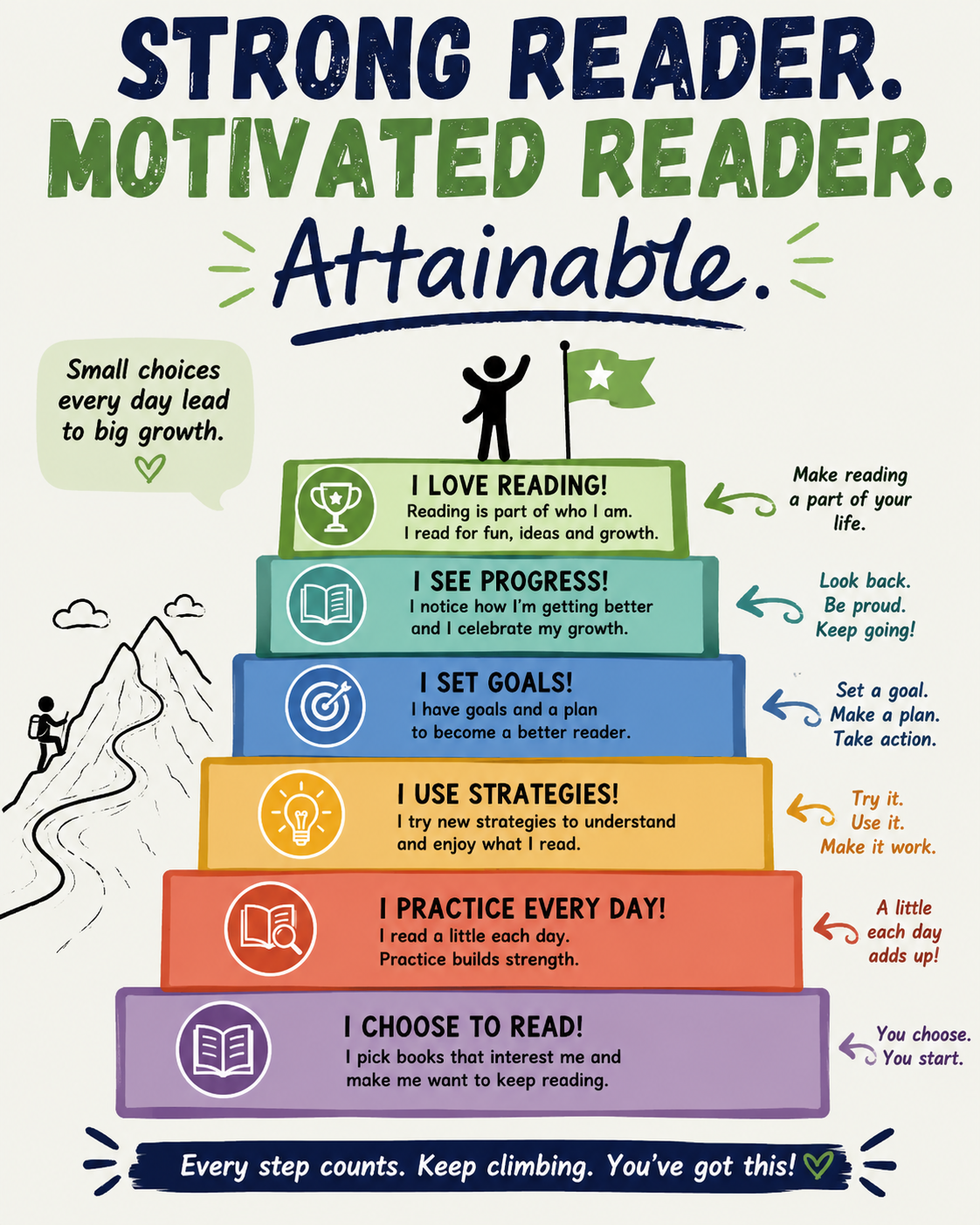
If your child can decode the words but still dreads reading or finds it "boring", the fix usually isn't more drilling, it's building small, positive routines that make reading feel doable. Make sure its a choice for them, not a chore for you!
I tell parents all the time, I wasn't a reader when I was a kid, fantasy and fiction books forced on me, I could never process the difference from the Hobbit to Peter Rabbit. Slowly, I evolved to enjoy reading because I started in graphic novels (Garfields, Batmans) and then found topics that were interesting to me, non-fiction! Here are five that I use with students across my school district, all of which work in less than ten minutes a day.
1. Don't set timers, Set goals
A lot of us love to set 10min a day or 20min a day goals for reading, but how many of us take 5min to get into the book or chapter, before we're rolling? Set a goal of 2 pages a day, make it low so the pressure is off and students possibly get caught into the book and read a little more!
2. Take them to the Graphic Novel section
Sometimes the reading/imagination piece is where students think its "boring". Finding graphics with reading is the same as reading! It tells a story that you process, creates themes you can discuss and teaches us lessons.
3. Ask one question, not a quiz
After reading, ask a single open question, "What would you have done?" or "What did you dislike about the book". We never give students an opportunity to say that they didn't like the book and teach them how to express why they don't like something. One good conversation beats ten worksheet questions.
4. Follow the interest, not the level
A motivated reader on a "hard" topic outperforms a bored reader on a "just-right" one. Graphic novels, sports bios, and how-to guides all count. Non-fiction young adult can offer great selections, or even adult non-fiction novels that interest your child.
5. Tracking or Praising wins where they can see them
Tracking can be a way to motivate certain children, but praising them and having those discussions about the book is a much more impactful motivator. When my dad would ask what I was reading and show an interest, I learned to share, articulate and explain.
Hopefully those 5 help with any parent or educator struggling with a student. But if they're not far behind in reading levels, I find there's no need to push them. Unless its a novel study, then trade off reading a chapter to listening to the next chapter.