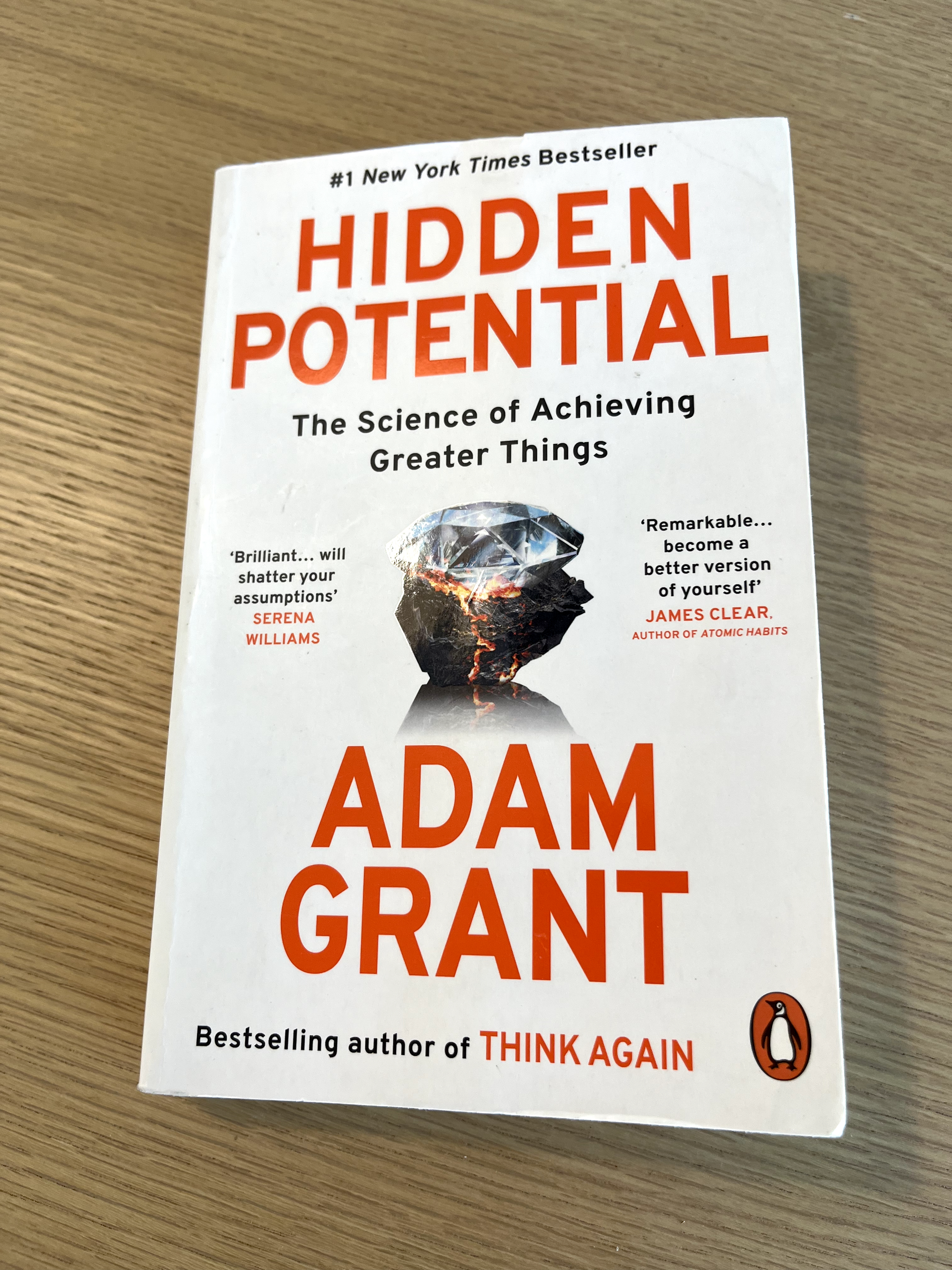
One of the recents books I've read in light of my teaching career is Hidden Potential by Adam Grant! A author I have a lot of appreciation and gratitude for, Grant is an organizational psychologist who completes in depth research and explains deep psychological behaviour through stories!
In this book, the overall message is seeing what isn't there. It sounds almost out of the box or too esoteric, but in reality I would argue its 2 things: 1. Feeling, rather than seeing; 2. Finding other access points for success.
When we see our child not reading, we see them not reading and want to solve it. When we see our child not doing well in math, we see them struggling and want to fix it. But what is the feeling around reading or math? Many students I work with have this fixed mindset ("It's boring", "It's too hard", "I'am not good at it"). This is the feeling I am talking about. Those words are a feeling, that the child can't really articulate, that's what we want to feel out more and dig into!
-
Ask them about why its boring or too hard? What makes it that way? Be intrigued like a detective, sometimes you'll tug on a thread to gently pull. Sometimes they're unaware of why. The conversation might feel uncomfortable for them and they might throw themselves into the couch or announce "Mom stop!" Don't force it, take a beat and approach it a day later.
-
Move to a Thought writing exercise, where you hand your child a blank piece of paper and they're expected to write all associations they have with the topic. Any word can be included. Tell them they can draw sketch anything they want for 5 minutes, there are no parameters. Give them the freedom to doodle, write how dumb this exercise is whever they're stuck. In allowing this, it suppresses the brains unconscious from feeling the need to reject it.
-
Debrief and see if anything comes up, maybe there was a math teacher who was overbearing or exhausting. Maybe it was a feeling of embarasment in science thats left them feeling out of touch with the subject. Maybe the word "I'm not smart" appears. All of these can really be an indication of how your child is feeling about school or a particular subject.
-
Relate to it! If you can, relate to your child's feeling from your own time at school, with something similar. Give them insight into how you overcame it (or maybe you didnt, you'd be surprised how many adults i talk to that think they're "Not math capable".
-
Build them up! Explain that anything is practice in life, I can't play the cello, but that doesn't mean I'am not good at the cello, it means I need more practice. Explain no one entered this world knowing how to walk...what did you have to learn first? Lifting your neck, rolling/crawling, balancing on the table and taking a step (FALL). Getting up and taking the step again!
Ask them (this is key) if they would like to get better at this thing? If the answer is yes, great set a goal to slowly build up the strength of this in those areas. You can use worksheets, games or money strategies at home! Access some worksheets or email me with any questions and I'd be happy to help.
But, What if They Don't Want to Improve
If the answer is NO, GREAT! It means your child has understood themselves in relation to the subject, but still (at this moment) feels no desire to get better at it. This is where we start finding other access points for success! This is where we as the parent or teacher, try to notice things our students do.
School work isn't for everyone, but are they in the arts (music, dance, theatre), are they in sports (basketball, soccer, football, hockey), are they into crafts, video games, reading, building? These are things to notice and see if you can expand their confidence, sign them up for programs, inquire to the teacher about utilizing these in projects for a really struggling student. If you can build on these strengths, that confidence can seep into other projects or assignments and eventually into the subject themselves.
Now of course, some of these hobbies may be too expensive or elaborate to get started in. But then starting digging into more niche things: are they compassionate and caring (do they babsit), do they love animals and enjoy their presence, are they outside most of the time playing make believe, do they doom scroll on their phones endlessly? *Ill write another post about social media and phones soon.
All of these can be insight into strengths your child has and can be explored and rewarded! Its not that in light of all this I am saying they don't have to complete the math homework or finish the project, I am saying that in spite of those, figure out where we can guide them into their hidden potential, through feeling or through access points.